NFL Division Rivalry Betting Trends
Few matchups on the schedule carry the edge of a division clash. When two rivals who share a division meet, records go out the window, role players raise their level, and a double-digit favorite can suddenly look very beatable. That is exactly why NFL division rivalry bets have become one of the sharpest angles for anyone who follows the league closely. At Voltage Bet, we like markets where familiarity, history, and emotion collide, because that is where value tends to hide.


Published July 27, 2026
AI Summary


Here is how we read the trends shaping division matchups, and how you can put them to work throughout a full season.
Why Division Rivalries Play Differently
Every NFL team plays its three division rivals twice a season, once at home and once on the road. That means six games a year against opponents who know your tendencies inside out. Coaches have months of film, familiar personnel, and a clear sense of what the other side wants to do.
That familiarity is the single biggest reason division games tend to stay close. The talent gap that looks huge on paper often shrinks once the ball is snapped. A rebuilding team that struggles against the rest of the league can still hang tough against a rival it sees twice a year. For bettors, that changes how you should treat spreads, totals, and matchups across our NFL betting markets.
Don't Wait for the Final Score

Live spreads, totals, moneylines, and props give you new ways to bet every Saturday matchup.
See Live OddsTrend 1: Division Underdogs Keep It Close
The most consistent division angle is a simple one: underdogs cover the spread at a strong rate in rivalry games, especially early in the season. Because these teams know each other so well, blowouts are harder to pull off, and the extra points an underdog receives carry real weight.
The effect is most pronounced in the opening weeks, when the market is still reacting to preseason narratives and last year's results. Point spreads can get inflated before anyone has proven anything, and a division dog catching a generous number is often better than its price suggests. Exact records shift from season to season, so treat any historical figure as a guide rather than a guarantee, but the underlying logic holds up year after year: familiarity keeps games tight.
Trend 2: Totals Often Lean Under
Low-scoring, grind-it-out football is a hallmark of division play. When defenses know an offense's every wrinkle, points come harder. That pushes plenty of rivalry games toward the under, particularly in matchups with a modest total to begin with.
The effect grows as the calendar turns. Late-season division games in outdoor stadiums bring cold, wind, and rain into the equation, and all three tend to drag scoring down. If you are weighing a total in a December rivalry game up north, the weather report deserves as much attention as the box score.
There is a spread angle tucked inside this too. In a low-total game, a big favorite has fewer possessions to build a large margin, which makes generous underdog spreads even more appealing. When a defensive slugfest is likely, the points an underdog receives can be the difference between a cover and a near miss.
Trend 3: Records Do Not Tell the Whole Story
Straight-up standings can be misleading in rivalry weeks. A struggling team hosting a first-place rival has every reason to raise its level, and division pride is a real thing on the field. Add in a visitor that may have already clinched something, or be looking ahead to a bigger game, and you get spots where the lesser team is live for an outright result.
This is why we always separate a team's overall form from its division form. Some teams simply match up well against a specific rival year after year, regardless of how the rest of their season goes. Tracking those head-to-head patterns over several seasons gives you an edge the raw records miss.
Division Rivalries Worth Circling
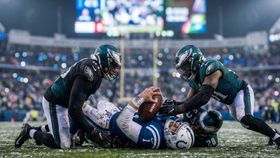
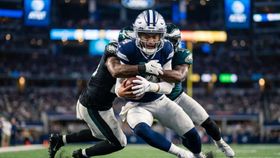
Every division has its flashpoints. The AFC North built its reputation on the physical Steelers-Ravens series, one of the most consistently close rivalries in the sport. The NFC East runs on the Cowboys-Eagles feud, where seeding often hangs in the balance. In the NFC North, Packers-Bears is the league's oldest rivalry and rarely respects the form guide, while the AFC West gives us Chiefs-Raiders with plenty of history and needle.
You do not need a marquee name to find value, though. Each of these matchups happens twice a year, giving you a second look at the same trends and a chance to adjust based on what the first meeting showed.
FAQs
Are division underdogs really worth backing?
Historically, division underdogs have covered the spread at a strong rate, particularly in the first few weeks of the season when spreads can be inflated. It is a trend, not a lock, so always weigh the specific matchup before you commit.
Why do division games go under so often?
Familiarity between rivals makes offenses easier to defend, and late-season games in cold outdoor stadiums add weather into the mix. Both factors tend to hold scoring down.
Do regular-season records matter in rivalry games?
Less than you might think. Division pride and deep familiarity often lift the weaker team, so head-to-head history is usually a better guide than overall standings.
How many division games does each team play?
Six per season, two against each of its three division rivals, split home and away.
Ready to Back a Rivalry?
Division week is where the league's oldest grudges come alive, and it is one of the best places to put your read on the game to the test. Explore the latest lines, live odds, and matchups at Voltage Bet, and line up your next division play before kickoff.