
Back-to-Back Matches: How Fatigue Affects Virtual Sports Players
Back-to-back matches in player-driven esports build mental fatigue, resulting in slower reaction times, predictable decision-making, and emotional tilt. Because sportsbook lines rely heavily on historical ratings and form, they often fail to reflect session fatigue, creating value on fresher opponents or total scoring lines.


Published October 21, 2026
AI Summary


Match one, match two, match eight. In esports leagues where the same players compete repeatedly within a single session, the player you're backing at 9 p.m. may not be the same one you watched at 6 p.m. In this guide, we break down how back-to-back schedules work in esports betting, how fatigue shows up in results, and how to factor it into your reads.
Why Back-to-Back Matches Matter
In e-soccer, e-basketball, e-hockey, and similar leagues, matches are short. An e-soccer fixture can consist of two halves, each just a few minutes long. That means the same players can face off several times in an hour and stay at the controls for long sessions.
Traditional sports have built-in recovery. A soccer team plays once or twice a week. An esports player in a busy league may have only a few minutes between matches. Concentration, reaction speed, and decision-making all take a hit as the hours stack up.
One quick note on terms. Fatigue only applies when there's a human at the controls. Computer-simulated virtual sports, where software generates the result, don't get tired. Everything in this guide is about player-driven esports.
How Fatigue Shows Up
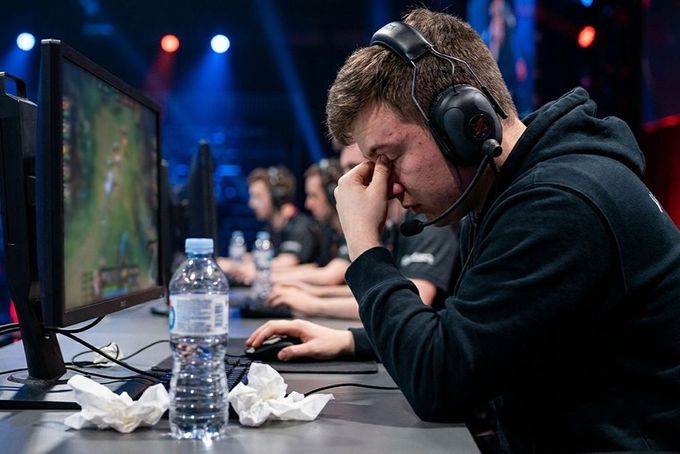
Fatigue in esports isn't about tired legs. It's mental, and it builds slowly. Here's what it tends to look like.
Slower reactions and more errors
Late in a session, players can react a fraction slower and make more small mistakes. A misplaced pass, a mistimed tackle, or a defensive switch left open. In short formats, one error can decide a match.
Drifting decisions
Tired players often fall back on habits. They play more predictably, take fewer risks, or force the same move that worked earlier. Opponents who are still sharp can read and punish that.
Tilt
Tilt is frustration that bleeds from one match into the next. A painful loss, a late equalizer conceded, or a disconnect can rattle a player. With only minutes before the next kickoff, there's little time to reset. One bad result can turn into a run of them.
The warm-up effect
Fatigue isn't the only effect of the session. Some players start slowly and need a match or two to find their rhythm. Their early results can understate their true level, just as late results can overstate a decline.
How Fatigue Affects the Odds
Most lines are built mainly on player ratings, recent form, and head-to-head history. They may not fully account for where a player sits in their session, or how many matches they've already played.
That creates a gap. If a strong player is deep into a long session and showing signs of wear, their price may still reflect their usual level. If a slightly weaker opponent is fresh, the market may be underrating them in that moment.
Fatigue can also shape totals. A tired player who starts leaking goals or points can push games over the line, while a player who turns cautious can drag scoring down. Watch which way each player's game tends to drift.
A Worked Example
Say Player A is the stronger player and faces Player B. The board reads:
- Player A: 1.70
- Player B: 2.20
Convert each price to implied probability by dividing 1 by the decimal odds. Player A sits at 58.8% and Player B at 45.5%. Together they add up to 104.3%, and the extra 4.3% is the book's margin.
Now add context. Player A is on their eighth match of the session and has dropped three of their last four, conceding more each time. Player B only joined the session an hour ago and looks sharp. If you decide Player A's real chance right now is closer to 52%, Player B moves to around 48%. That's above the 45.5% the price implies, so Player B is worth a closer look.
The key is that your adjustment comes from evidence you've seen, not from an assumption that every long session means a decline. Some players hold their level for hours.
How to Track Fatigue
You don't need special data, just attention.
- Count the matches. Note how many matches each player has played in the current session.
- Check the trend. Look at their last few results and scorelines. Are they conceding more or creating less than they did earlier?
- Compare session position. Check whether a player's late-session results tend to drop compared with their early ones. Some players have clear patterns.
- Watch for tilt triggers. A heavy loss, a controversial finish, or a disconnect can all signal a wobble in the next match.
- Know the player. Experienced competitors often manage long sessions better than newer ones.
Strategy and Tips
No approach guarantees a return, but these habits sharpen your reads.
- Treat fatigue as an adjustment, not a system. It shifts your read by a few points. It doesn't override skill.
- Look for mismatched sessions. The clearest spots come when one player is deep into a session, and the other is fresh.
- Watch live. In live betting, you can see a tired player's habits in real time. Errors, passive play, or rising frustration can show up before the price adjusts.
- Be wary of early-session reads. A player's first match may not reflect their true level if they tend to start slowly.
- Mind your own session too. Fast schedules can tire bettors as well. Set a session bankroll and use our responsible gaming tools to set limits before you start.
Common Mistakes to Avoid
- Assuming every long session means decline. Some players stay sharp for hours. Look for evidence first.
- Overreacting to one bad result. A single loss isn't proof of fatigue or tilt.
- Ignoring the warm-up effect. Slow starts can make a player look worse than they are early in a session.
- Confusing esports with simulations. Fatigue applies to human players, not software-generated results.
- Skipping the rules. Disconnects and unfinished matches can affect how bets settle. Read our betting rules before you bet.
How to Bet Esports at Voltage Bet
Getting on takes less than a minute.
- Sign up or log in to your Voltage Bet account.
- Head to the esports section of our sportsbook and pick your game.
- Check recent results for both players, then pick your market.
- Set your stake and confirm.
Fresh legs don't matter in esports. Fresh minds do. Track the session, spot the slide, and charge up your next esports bet with us. Join now.
Frequently Asked Questions
Does fatigue really affect esports players?
It can. Long sessions with short breaks can slow reactions, increase errors, and dull decision-making, especially in fast formats.
How do back-to-back matches affect betting odds?
Lines are mostly built on ratings and recent form. They may not fully reflect how many matches a player has played in the current session, which can create value on the fresher player.
What is tilt in esports?
Tilt is frustration that carries from one match into the next. It often follows a painful loss and can lead to a run of poor results.
Do virtual sports players get tired?
Human esports players do. Computer-simulated virtual sports don't involve human players, so fatigue doesn't apply.
How can I spot fatigue before betting?
Count the matches each player has played in the session, check their recent scorelines, and watch for rising errors or signs of frustration.